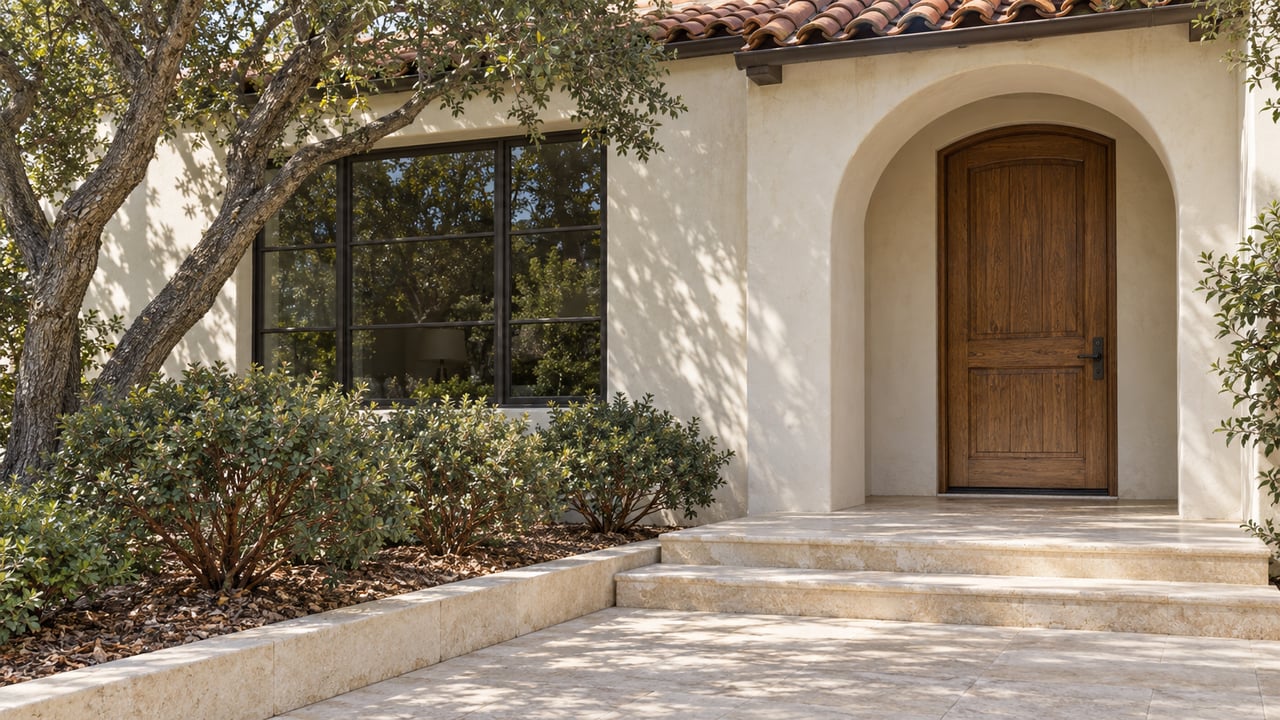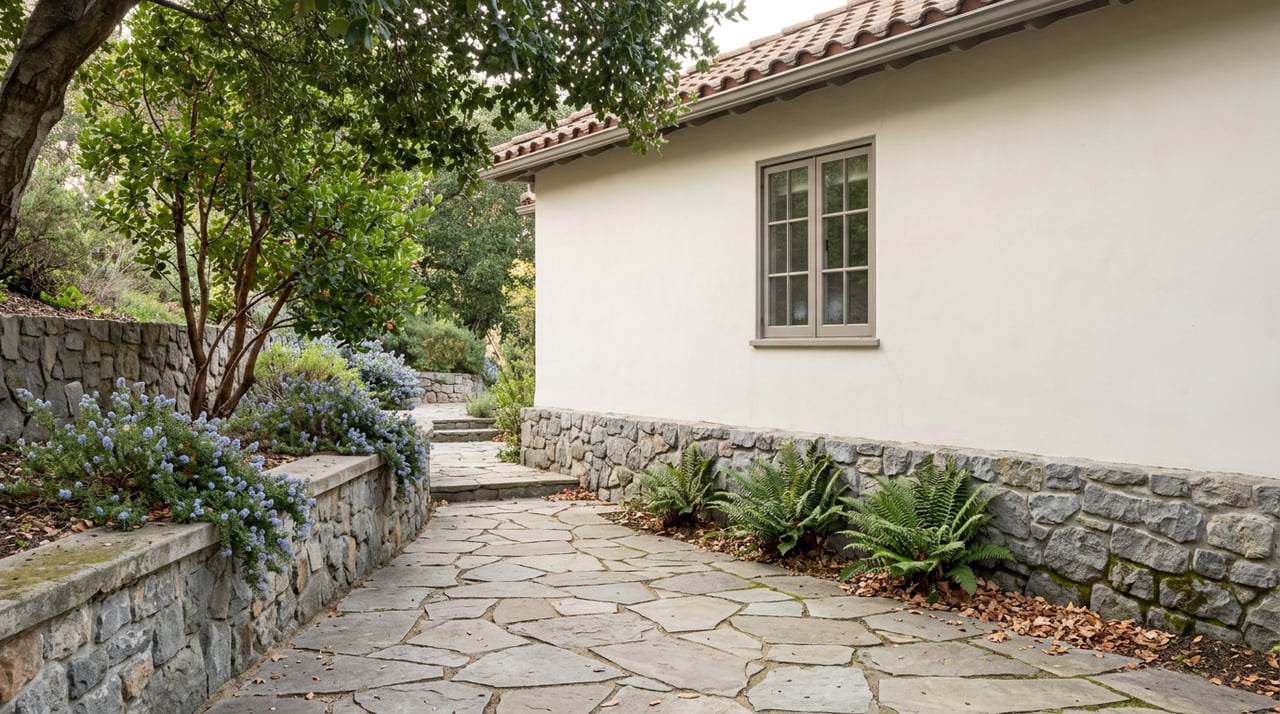
The houses in Crocker Highlands were built to outlast the people who built them. Walk the curving stretch of streets the Crocker Land Company laid out in the 1910s and 1920s and you can still see the intention in every roofline: Tudor Revival half timbering, Spanish Colonial stucco and clay tile, Craftsman bungalows with their deep porches, a few homes credited to Julia Morgan and Bernard Maybeck. These are not disposable structures. They were built for permanence.
The pipe running from the foundation to the street was not built with the same ambition. It was built to code for 1925, and 1925 code meant clay.
That gap between the house and what carries its wastewater is the reason a specific piece of East Bay regulation shows up in nearly every Crocker Highlands sale, whether the seller expects it or not. It is called the Private Sewer Lateral Compliance Certificate, and understanding why this neighborhood in particular runs into it so consistently tells you something the median price never will.
The Part of the Contract Nobody Assigns by Default
Here is the detail that surprises most sellers: nobody automatically owns the responsibility for this certificate. The East Bay Municipal Utility District, which administers the Regional Private Sewer Lateral Ordinance for Oakland, Piedmont, Emeryville, El Cerrito, Kensington and the Richmond Annex, leaves the question of who obtains the certificate entirely up to negotiation between buyer and seller. It is not baked into the transaction the way a title search is. It is a line item that two parties have to agree on, in writing, during a period when both sides are usually focused on inspection contingencies and repair credits.
In a neighborhood where homes routinely go pending in a matter of days, that negotiation either happens early and cleanly, or it happens under pressure with a closing date already on the calendar.
Why This Neighborhood Triggers It More Than Most
The ordinance applies whenever a property changes title, undergoes construction or remodeling valued over $100,000, or has its water meter resized. Title transfer is the trigger that touches every seller, and it is the one most East Bay real estate content treats as a formality. In Crocker Highlands, it rarely is.
Industry guidance on the East Bay's sewer lateral program is consistent on one point: most homes built before 1950 across this part of Oakland were fitted with clay or cast iron laterals, and those materials tend to leak at the joints once the surrounding soil starts to shift. Crocker Highlands sits on exactly the kind of rolling hillside terrain that produces that shifting. The same curving topography that the Crocker Land Company preserved for its aesthetic appeal, rather than flattening into a grid, is the topography that moves clay joints out of alignment over a century of freeze, drought and rain.
Put plainly: the architectural decision that makes this neighborhood distinctive from Oakland's flatlands is entangled with the infrastructure decision that makes its sewer laterals more likely to fail a pressure test. A 1928 Tudor on a curving street in Crocker Highlands carries a materially different lateral risk profile than a 1985 house on a flat lot in a newer subdivision, even though both are technically subject to the same ordinance.
What the Certificate Actually Requires
A Compliance Certificate is only issued after a licensed contractor performs a verification test, either hydrostatic or low pressure air, witnessed by an EBMUD inspector. The East Bay PSL program says a camera inspection alone, no matter how thorough, is not sufficient proof on its own.
If a seller cannot finish this process before the scheduled close, EBMUD offers a Time Extension Certificate, which grants 180 days to complete the work. Getting one requires mailing a $4,500 refundable deposit to EBMUD along with the completed TEC form. The deposit comes back once compliance is achieved, but it sits with the district in the meantime, and it is money that has to come from somewhere at exactly the moment escrow is already asking for closing funds.
Check the Fee Before You List
Pipe Spy's March 2025 article listed the Compliance Certificate fee at $225 and the TEC application fee at $94.
Check EBMUD's own posted fee schedule directly before finalizing a listing budget.
The certificate fee itself is the smaller cost anyway. The real budget line is the repair or replacement work if the lateral fails its test. Estimates for that work run from a few thousand dollars for a straightforward repair up past $10,000 for a full replacement, with many projects landing somewhere between $2,500 and $7,500 depending on the lateral's length, depth and how much excavation the job requires.
Why This Can't Wait for Escrow in a Market Moving This Fast
Over the three months ending in June 2026, Crocker Highlands homes sold for a median price around $2.3 million, with the average home spending roughly nine days on the market before going pending, down from about fifteen days the year before. Homes that draw multiple offers have reportedly closed near 45 percent above list price in that same short window.
A market moving at that pace does not leave room to discover a failed sewer lateral after an offer is accepted. Scheduling a contractor, getting bids, pulling city permits if the work touches the public right of way, and then scheduling an EBMUD-witnessed verification test all take real time, often measured in weeks rather than days. If a seller's plan is to handle the lateral question during escrow, the neighborhood's own selling pace works directly against that plan.
The sellers who avoid a scramble are the ones who treat this as a pre-listing task rather than a closing-week one.
A Practical Sequence Before You List
- Check your property's compliance status through EBMUD's own lookup tool before anything else. A prior certificate may already be on file and still valid.
- If there is no current certificate, hire a licensed contractor for a camera inspection to see the lateral's actual condition before committing to a repair plan.
- Get more than one written bid. Costs vary widely based on access and depth, and a second opinion has real value here.
- Confirm with the City of Oakland whether any work will require a Sewer Lateral Permit for the portion of the line in the public right of way.
- Decide, with your agent, whether you will complete the certificate before listing or plan to negotiate responsibility with a buyer, and put that decision in writing early rather than leaving it for the purchase agreement to sort out under deadline.
A few questions that come up often
Does the certificate cover the whole line, or just to the property line? In Oakland, the East Bay PSL FAQ says the property owner is responsible for the entire lateral from the house to the public sewer main, both the upper and lower sections. That differs from Alameda and Albany, where responsibility ends at the curbside cleanout.
What if my lateral was already replaced recently? Check status through EBMUD directly rather than assuming.
Does this only apply to sales, or does a remodel trigger it too? Both. Construction or remodeling valued above $100,000, and a change in water meter size, are separate triggers under the same ordinance.
The century-old craftsmanship that makes Crocker Highlands worth buying is not in question. What sits underneath it deserves the same attention before a sign goes in the yard. If you are weighing when to list a home in this neighborhood, or want a clear-eyed read on what a specific property's age and location mean for this process, the Robert Jones Team can walk through it with you. Let's Connect.
This article is general information, not legal, tax or financial advice. Consult a qualified professional about your situation.